Training · 5 min read
Functional Strength Training and Traditional Strength Training Are Not the Same Thing
Squat, hinge, push, pull, carry, rotate. Why Alloy programs strength through the patterns life actually uses, and what that changes for a member coming back from an injury.
By Coach Nick, Director of Training · August 28, 2026
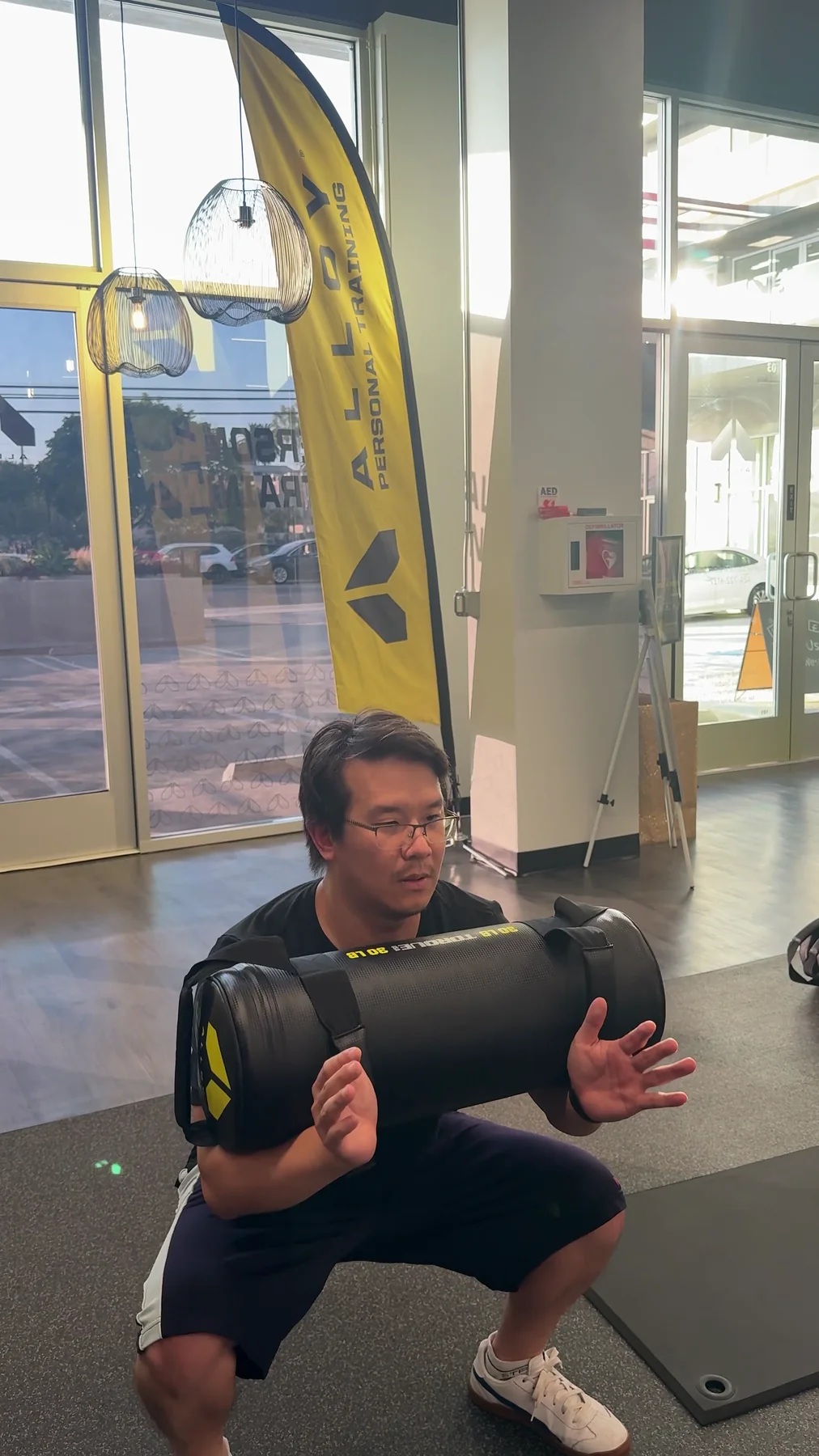
If you ask ten people at a gym what strength training is, you will get ten slightly different answers. To a bodybuilder, it is progressive overload on isolation exercises to grow a specific muscle. To a powerlifter, it is peaking a squat, bench, and deadlift for a one rep max. To someone rehabbing an injury, it might be leg extensions and lat pulldowns on machines. All of that is strength training. None of it is exactly the same job.
At Alloy, we teach functional strength training. That is a specific phrase, and it is not marketing language. It refers to training the body through the movement patterns it uses in real life, under load, so that the strength you build carries into everything you do outside the studio. That is a different job than isolating a bicep or peaking a deadlift, and after 40, it is the job most people need most.
The difference matters in practical terms.
Traditional strength training tends to be joint by joint
A traditional strength training session, in the bodybuilding or powerlifting sense, is usually organized around specific muscles or specific lifts. Chest day, back day, leg day. Bench press, deadlift, squat, rows. Machines that isolate a single joint's action. The goal is to overload that muscle or that lift, week over week, until the numbers go up.
There is nothing wrong with this. It builds real strength and real muscle. It is how competitive lifters and physique athletes have trained for decades. If your goal is a bigger bench press or a bigger set of arms, it is the fastest way to get there. What it does not do especially well is prepare your body for movement that requires multiple joints, multiple planes, and balance under load. Real life is rarely a single joint moving in a single plane.
Functional strength training is organized around movement patterns
The core patterns are squat, hinge, push, pull, carry, and rotate. Every human movement outside of a hospital bed is some combination of those patterns. Getting up from a chair is a squat. Picking up a grandchild is a hinge and a carry. Reaching a bag into an overhead bin on an airplane is a press with rotation. Building strength through those patterns is what makes strength show up in life, not just in the studio.
Functional training also connects movements to each other. A lunge into a shoulder press is a lower body movement chained to an upper body movement, and it forces your core and hips to stabilize while your arms work. A bird dog is a controlled rotation drill that trains anti extension of the spine while you move a limb. A cable chop trains rotation from a stable base. Every one of those pieces has a use outside the gym.
A 2021 study published in the journal Sustainability compared functional strength training against traditional strength training in middle aged adults across 24 sessions over 8 weeks. The functional group improved their Functional Movement Screen score from an average of 12.65 to 15.11. The traditional group improved from 12.7 to 12.97 (Sustainability, 2021). Both groups got stronger. Only one group meaningfully changed how they moved.
Both matter. The Alloy answer is to blend them
None of this is an argument that traditional strength training is bad. It is not. It is an argument that if you only train that way, you are leaving movement quality on the table. If you only train functional, you may not overload any single pattern hard enough to see meaningful strength gains.
Every Alloy session is built as a strength training session that uses functional movement patterns. We progress the load. We track the numbers. We push members into weights that are heavy for them relative to where they started. That is the strength training piece, and it is what builds muscle and preserves it over time. But the movements themselves are chosen to build multi joint, multi plane strength. A squat under a rack, not a leg extension. A row that includes anti rotation, not a fixed cable pull. A press that comes out of a lunge, not from a bench with your back stabilized for you.
Stability, mobility, and flexibility are threaded through the same session. Stability trains the joints to hold position under load. Mobility trains the joints to move through the range they should have. Flexibility trains the tissue to stretch when it needs to. If we do all three inside the same strength framework, we get members who can lift heavier weights, in better positions, without injury.
Where this shows up
Heather came into Alloy in the middle of an ACL recovery. She had torn her ACL in December and had surgery in January. Her mobility was limited. Strength was not optional for her, and she needed a program that would build her back up while working around what her knee could actually tolerate. We started with upper body and core, and moved to lower body when it was safe. Her structured PT twice a week and her Alloy sessions on the other days worked together. A traditional bodybuilding split with heavy squats and deadlifts would have been the wrong choice for her at that stage. A functional strength training approach that met her where she was, and progressed load through positions her knee could handle, was the right one.
That kind of programming choice is what functional strength training makes possible. Functional strength training is not softer or easier than traditional strength training. What it does is match how you actually move.
The strongest 60 and 70 year olds we work with are not the ones who bench press the most. They are the ones who can still get off the floor without a hand, carry groceries up stairs without a break, and pick up their grandchildren without their back going out for a week. That is what strength looks like at that stage of life. Training that specifically produces it looks different than training a college athlete for a max squat, and it should.
Sources
- Sustainability, 2021 study on functional strength training and Functional Movement Screen scores
