Body composition · 6 min read
Losing Fat and Keeping Muscle: What Actually Works After 40
The scale weighs everything you walked in with. After 40 what you lose matters more than how much, and protein, a modest deficit and resistance training are what decide it.
By Coach Nick, Director of Training · August 28, 2026
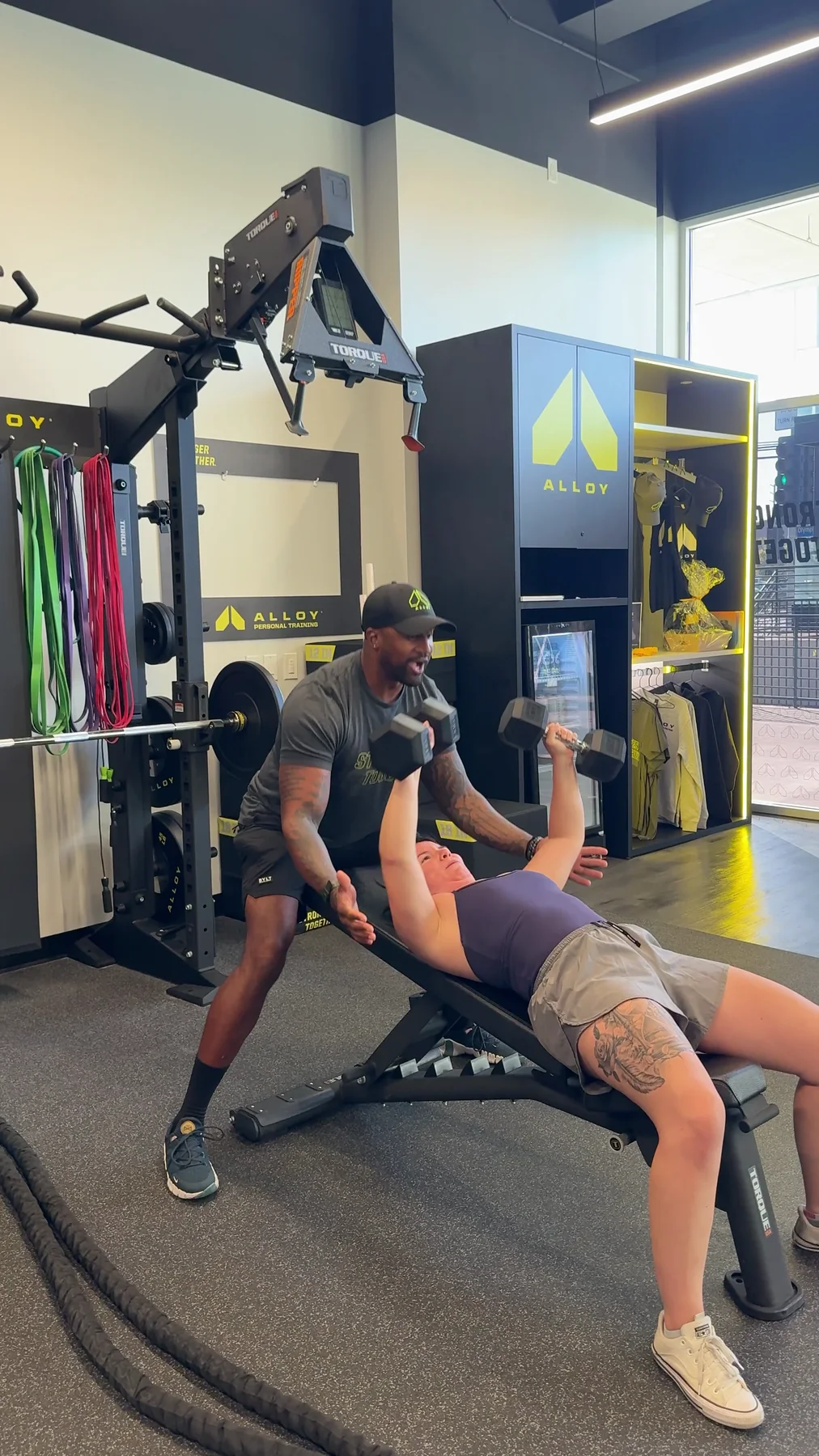
Most people who walk into Alloy for a Starting Point Session tell me they want to lose weight. When we dig in, that is almost never what they actually want. What they want is to look leaner, feel stronger, move better, and buy the same jeans they wore ten years ago. That goal is not the same as losing weight. It is body recomposition, and it is a very different job.
The scale is a bad tool for this job. It weighs everything you brought with you into the studio. Fat, muscle, bone, water, breakfast. It cannot tell you what you are losing when the number goes down. And after 40, what you lose really matters.
The reason has to do with what happens to muscle as we age. Adults start losing muscle at a slow rate in their 30s, and that rate accelerates after 50. The medical name is sarcopenia, and it is one of the most important markers we track on the InBody scan at Alloy. Losing five pounds of muscle to lose five pounds on the scale is not a win. It is a small step toward frailty. That is the reason we frame every conversation around body composition, not weight.
Shradha is one of our members. She came in eight weeks postpartum, in a body she said did not feel like hers. Her first InBody showed 165.4 pounds, 38 percent body fat, and 56 pounds of muscle. A few months in, she was at 160 pounds and 31 percent body fat, with 60 pounds of muscle. The scale had moved five pounds. The scan told a different story. She had lost roughly 13 pounds of fat and added 4 pounds of muscle. That is what recomposition looks like. Same person, same size on the clothing tag, entirely different body underneath.
Getting there is not complicated, but the pieces have to line up.
Protein is the anchor
If I could only get a new member to change one thing about how they eat, it would be their protein intake. Protein is not magic. It is the raw material your body uses to build and hold onto muscle, and most adults over 40 do not eat enough of it.
The current Recommended Dietary Allowance for protein is 0.36 grams per pound of body weight. That number was set decades ago and was designed to prevent deficiency, not to preserve muscle. Every major review of the aging and nutrition literature in the last ten years has concluded it is too low for older adults. A 2023 review published in the Journals of Gerontology summarized it clearly: total protein intakes below the RDA negatively affected lean body mass in older adults, and intakes above the RDA supported muscle preservation, especially when paired with resistance training (Journals of Gerontology, 2023). The same review pointed to contemporary recommendations of 0.45 to 0.7 grams per pound per day for adults 65 and up.
A separate study published in Medicine and Science in Sports and Exercise (2022) followed 130 older women through 24 weeks of resistance training. The moderate and higher protein groups gained more than double the muscle of the low protein group. Fat loss was similar across all three groups. Protein did not determine whether they lost fat. What it determined was how much muscle they kept in the process.
For members actively working on body composition, our target at Alloy is a little higher than the general research recommendation. We aim for 0.7 to 0.95 grams of protein per pound of body weight per day. For a 160 pound member, that works out to 112 to 152 grams of protein daily. That number surprises most people. It comes out to roughly a palm sized serving of protein at every meal, plus a protein based snack once or twice a day. It is a real change from how most people eat, and it is the single biggest lever we pull.
Caloric deficit does the fat loss
You cannot lose body fat without a caloric deficit. That is thermodynamics. But how you build the deficit matters a lot.
Aggressive deficits burn muscle along with fat. They also crash energy, ruin training quality, and disrupt hormonal balance. None of that is worth a faster drop on the scale. At Alloy, we use the InBody Basal Metabolic Rate reading as the anchor. If a member wants to lose fat, we aim for a modest daily deficit of a few hundred calories below their maintenance number. Slow, steady, and boring. That is the pace that actually holds up over months, and it protects muscle while the fat comes off.
Resistance training makes the muscle piece work
Protein plus a deficit alone will not build muscle. It will preserve some of what you already have if the numbers are right, but building requires stimulus. That stimulus is resistance training.
A lot of general fitness advice misses this point for adults over 40. Walking, cardio, yoga, and Pilates all have real benefits. None of them will build muscle at a meaningful rate. The specific stress of moving progressively heavier resistance is what signals the body to keep and grow muscle tissue. Two to three well designed strength sessions a week is enough for most members. Four is better for members with more aggressive goals.
The last piece is maintenance
The mistake most people make after they hit a body composition goal is going back to whatever they were doing before they started training seriously. That is how they lose everything they earned. Maintenance is a different job than the recomposition phase, but it is not eating whatever you want either.
The maintenance protocol at Alloy looks like this. Protein stays high. Caloric intake climbs back to maintenance level. Training frequency holds at two to three sessions a week. Monthly InBody scans track that muscle is not slipping and fat is not creeping back. Small drifts in either direction are normal. Big drifts mean something in the routine broke, and we address it in the accountability session that month.
We do it this way because we have watched the alternative fail. Most people can lose fat for a few months. Very few can hold the result for years. The ones who do treat maintenance as its own skill, not a break from the work.
The scale will not tell you if any of this is working. The InBody scan will.
Sources
- Journals of Gerontology, 2023 review on protein needs in older adults
- Medicine and Science in Sports and Exercise, 2022 study on protein intake and body recomposition in older women
